

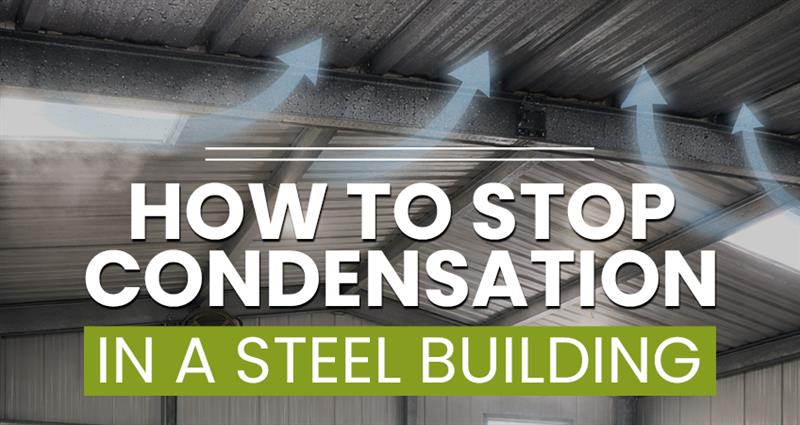

It’s a question we hear more often than you might think.
Usually it comes up halfway through a design chat, once the excitement of layouts, glazing and finishes has settled and the practical questions kick in. Someone leans back and asks, “Be honest… do steel framed buildings have condensation problems?”
Short answer?
They can — if they’re built badly.
Longer answer (and the important one): when steel frame buildings are designed properly and insulated correctly, condensation isn’t an issue at all. In fact, in many cases, they perform better than traditional timber structures.
Let’s break it down properly, without the sales fluff.
Why condensation happens in steel framed buildings

Condensation is simple physics, really. Warm, moist air meets a cold surface, and moisture forms. If you’ve ever seen steamed-up windows on a cold Essex morning, you’ve seen it in action.
Steel conducts temperature extremely well. That’s both its strength and its weakness. If steel is left exposed internally, it can become a cold surface where moisture in the air condenses. Click here to check which frames are best.
That’s where poor builds fall down.
And where good ones stand out.
At Garden Rooms 365, we deal with this at the construction stage — not after problems appear.
How to stop condensation in a steel building

This is the key bit.
We fully line the inside of the steel frame with PIR insulation boards. Not partially. Not “where possible”. Fully.
PIR insulation creates a thermal barrier between the steel and the internal environment, meaning warm air inside the garden room never comes into contact with cold steel surfaces.
- No cold bridge.
- No trapped moisture.
- No condensation dripping down beams six months later.
We also factor in proper vapour control layers and ventilation, because insulation alone isn’t the whole story. Buildings need to breathe — just in a controlled way.
How to stop condensation on steel beams specifically
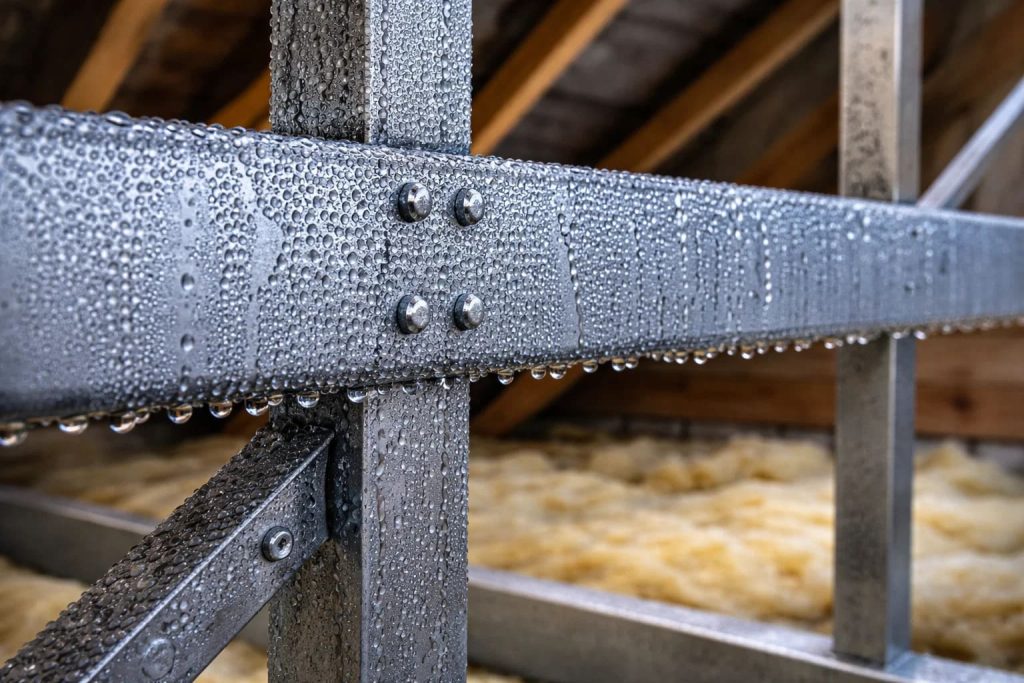
Steel beams are the usual culprit people worry about — and rightly so.
The fix is straightforward when planned properly:
- Steel beams are fully wrapped and insulated
- Cold bridging points are eliminated
- Internal finishes never sit directly against bare steel
- Air gaps are controlled, not accidental
Once it’s done, you’d never even know the steel was there. Which is exactly the point.
Is condensation a problem with metal sheds?
Yes. Often.
But this is where things get mixed up online.
A thin, uninsulated metal shed from a DIY supplier is not the same thing as a properly built steel-framed garden room. Sheds sweat because they’re basically big cold boxes with no thermal control.
A garden room is a habitable structure. Different materials, different build standards, different outcomes.
Comparing the two is a bit like comparing a tent to a house. Same idea, wildly different execution.
What is the downside of a steel frame house or building?
Honestly? Very little unless it’s poorly designed.
Steel needs correct insulation detailing — you can’t cut corners. But when done properly, steel frames offer:
- Excellent structural strength
- Long-term durability
- No warping, twisting or rot
- Consistent performance year after year
In Essex, where weather swings from damp winters to surprisingly warm summers, that stability really matters.
So… do steel framed buildings have condensation issues?
They can — but they don’t have to.
Condensation isn’t caused by steel. It’s caused by poor insulation, bad detailing, and rushed builds. When steel frames are insulated correctly (like lining the internal steel with PIR boards), condensation simply isn’t a problem.
We’ve built garden rooms across Essex — from tight suburban plots to wide open gardens — and the approach stays the same every time: design it properly from day one.
Thinking about a steel-framed garden room in Essex?
If you’re considering a garden room and want straight answers — not sales talk — we’re happy to help.
At Garden Rooms 365, we design and build bespoke garden rooms entirely in-house, from the first sketch to the final fix. We’ll assess your site, explain the build in plain English, and make sure things like condensation are dealt with properly before a single panel goes up.
Get in touch for a free site survey and quote, and let’s design something that works — not just now, but for years to come.


